
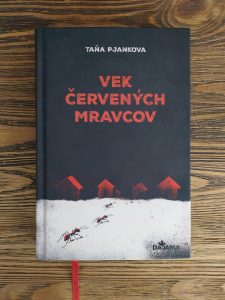
A novel describing the period of the Great Famine in Ukraine (1932-1933) from the perspectives of ordinary people of various ages, beliefs, and social standings. The three main characters offer a perfect insight into the fates of the many people during the Holodomor—people this book cannot be talked about individually, as no one speaks of them by name; there were simply too many (an estimated 3.9 million!). It is a sombre piece of history that, like other great crimes, should never be forgotten.
The work is told through the perspectives of three main characters whose stories are initially linked only by their shared time and location. Each character faces a different struggle. The book alternates between their perspectives, their paths gradually drawing closer—at first merely parallel, until they finally converge in the closing pages.
Young Dusja symbolizes a pure, youthful spirit enduring the hardships life has thrust upon her. From the start, she grapples with an existential crisis, not only for herself but for her family, who are losing their energy and hope with each passing day. In contrast, Sola, the wife of a successful Communist leader, copes with her own tragedy—the loss of her daughter—through compulsive overeating. However, her psychological struggles eventually lead to a profound awakening. Then there is young Syryd, a man craving recognition from those around him, especially from his old, unrequited love—Dusja’s mother. Syryd is an unstable, violent, and egocentric man, emotionally wounded; every new rejection or sign of contempt lashes out at him, consuming him to the very core of his being. The psychological depth and evolution of this character are undoubtedly masterfully crafted.
With every appearance, the author strives to provide an understanding of each character’s actions. Some writers argue that for the sake of flow, a book should contain as few unnecessary words as possible. I believe that in The Age of Red Ants, the author took extraordinary care to ensure that every word and every brief episode contributes a grain to the mosaic, ultimately painting a picture of disgust at the cruelty of reality. Just imagine a world where a mother leaves her young daughter with total strangers who, like her, have nothing to swallow but their own saliva and memories of life before the famine. It is an act of desperation and a final shred of hope—perhaps the child might receive a scrap of food from these new people… or at least the mother won’t have to be the one to give her nothing, knowing she has long since had nothing left, nor ever will. It is truly remarkable how, in such a short novel, the author managed to capture such deep emotions, historical customs, character development, and a cohesive story.
Current world events and the associated social moods often push individuals toward radicalization or the need to take a clear stance. Like most of my generation, I have never experienced war, oppression, or occupation by another country. And I believe that for people like me, the content of this book is essential from a values perspective. Primarily because it describes, and almost materializes, the everyday struggles and despair of ordinary people. It took me several days to read this book. It is not thick, yet the emotional weight of every page adds to its gravity, deepening a sense of emptiness that slows the reader’s eyes and leaves them lost in their own thoughts. I must admit, during those few days of reading this novel—and for several days after—I cherished a simple piece of bread so much more. That is precisely why the book is so relevant today. It isn’t written as just another stream of information or descriptions of horrors. The author wrote it so that even an average person can understand that what we consider an absolute daily minimum can, due to unsolicited circumstances, very quickly become nothing more than a feverish—or in the case of this book, a ‘hungry’—dream. Or rather, it could become one, if hunger didn’t consume dreams as well, its sheer magnitude flooding the entire lives of the main characters.